
COMM837:
Lesson 2: Race, Culture, and Media in Our Society

Introduction
Based on current demographic trends, the world is changing. Media and diversity research in the United States emphasizes the media’s role in race and culture in our society. What we see, read, and hear in the media—from print to broadcast, social media to traditional news media, and advertising to entertainment—influences both individually and collectively, shaping how we think about issues of race. Those working in the communications field must understand that the way we think about issues of race and about those from racial groups other than our own will translate into our messages and the images we craft.
Objectives
By the end of this lesson, you should be able to:
- Define terms such as race, culture, melting pot, and multiculturalism.
- Explain the demographics of U.S. society.
- Describe racial classifications used by the U.S. government.
- Critique the role of the media in U.S. society.
- Summarize the importance of studying diversity in communication.
Readings, Videos, and Assignments
By the end of this lesson, make sure you have completed the readings, videos, and activities found in the Lesson 2 Course Schedule.
Please direct technical questions to the IT Service Desk.


"Missed the Mark"
“Missed the mark.” It's the common phrase companies use when they “unintentionally” use racial groups in offensive ways in their marketing efforts.
Is it really unintentional? Most likely. But what’s really happening? How can we explain major companies getting it so wrong?
Select each of the dots in the following slideshow to view real life examples of how major companies "missed the mark." Click on the thumbnail images to enlarge and see details. Click again to collapse.
H & M
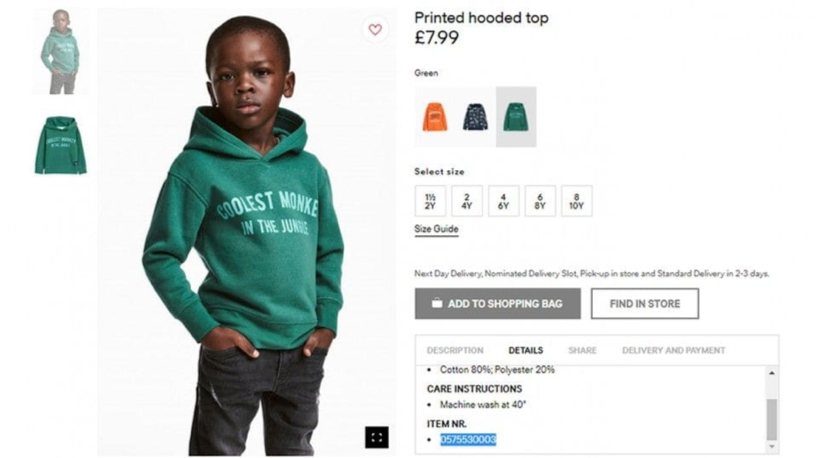
The New York Times reports that, in January 2018, the clothing retailer H&M apologized...for an image appearing in its online store that showed a black child model wearing a hooded sweatshirt that said “coolest monkey in the jungle.” The company removed the image...and said it would also pull the shirt from its stores worldwide.
The image was widely criticized online for its reference to a monkey, an animal that has long featured in racial and ethnic slurs. (Stack, 2018)
H&M stressed that the offensive correlation was unintentional. But, as Stack continues, "mistakes like this happen in the world of advertising with some regularity" (2018).
Dove
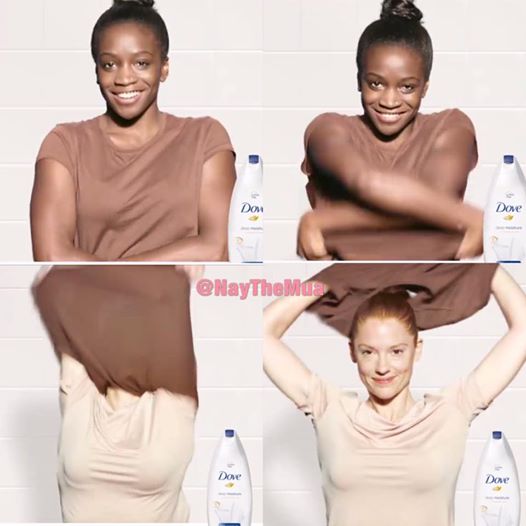
In October 2017, Dove, the soap company owned by Unilever, apologized for a Facebook ad that showed a black woman removing her brown shirt to reveal a smiling white woman in a crisp white shirt underneath.
The ad was criticized for employing a racist trope that black people could use soap to clean themselves into white people. In a statement at the time, Dove said it was “committed to representing the beauty of diversity” but had “missed the mark” with its ad, which was removed from Facebook. (Astor, 2017)
Nivea - Case 1
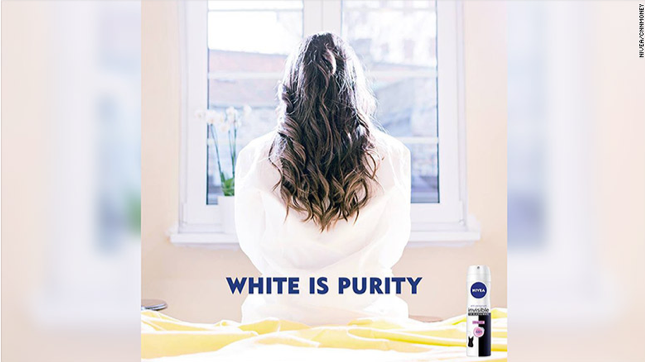
In April 2017, skincare brand Nivea pulled a deodorant ad that declared “White Is Purity” after people protested that the slogan is racist, and after others hijacked the ad’s online campaign with comments about white supremacy....
The caption on Nivea’s Facebook post read: “Keep it clean, keep bright. Don’t let anything ruin it, #Invisible.” (BBC News, 2017)
Nivea - Case 2
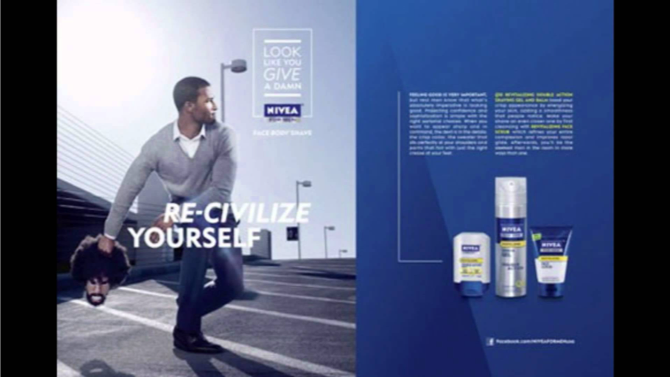
Time reports that, back in 2011, the same company had run an ad showing a well-groomed black man about to toss what looks like a rubber mask with scruffy facial hair and a large afro. The short-haired model, who is clean-shaven and wearing preppy casual Friday attire, sharply contrasts his former, pre-Nivea-using symbolic self. The text emblazoned over the model: “RE-CIVILIZE YOURSELF.”
The text in particular has been deemed insensitive and racist, as the idea of being “uncivilized” has historically been associated with African Americans, Africans, and pretty much anyone who isn’t white, Western or "first world." (Ma, 2011)
Pepsi
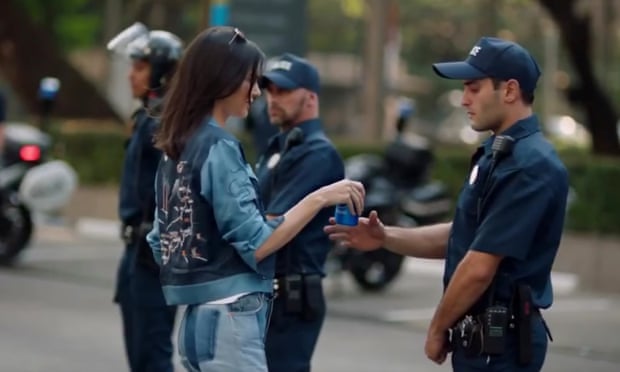
In October 2017, Pepsi featured reality star Kendall Jenner in a commercial appearing to borrow imagery from the Black Lives Matter movement, a grassroots effort created in 2013 to campaign against violence and systemic racism toward Black people. The ad also portrayed nearly every racial and ethnic group in stereotypical ways:
- Asians playing violin,
- Blacks dancing to hip hop,
- Muslim women wearing hijabs, and
- the LGBT community amidst rainbows.
According to critics, the ad, in which Jenner steps in the middle of a protest and saves the day with a soda, "trivialized the widespread protests against the killings of black people by the police," calling both it and the company "tone deaf" (Victor, 2017).
Like the other companies, Pepsi apologized, stating that it had been "trying to project a global message of unity, peace, and understanding. Clearly, we missed the mark" (Victor, 2017).
Starbucks
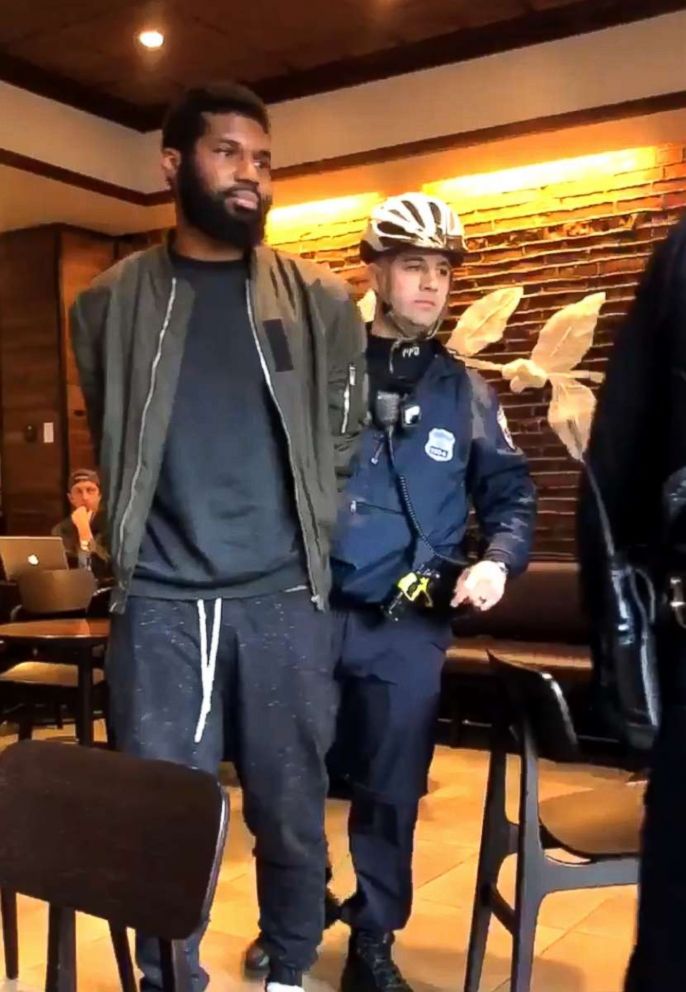
In 2018, on April 12, a white manager at Starbucks [in Philadelphia] asked two black men to leave after they asked to use the restroom despite not having bought anything. When they refused to leave, the manager called the police, who ended up arresting the two men. The apparent charge was trespassing, but Starbucks ultimately did not press charges. (Stalder, 2018)
What did Starbucks do? Apologize.
Unlike many companies before, however, it took another step by closing 8,000 stores across the country in May 2018 to conduct trainings on unconscious bias.
Unconscious, or implicit, bias refers to bias—prejudice—that we’re not aware we hold against a particular group, but that can still affect how we act toward that group. If a store manager sees trouble in Black patrons’ behavior but not in White patrons, or if ad executives use language or images in ads that "unintentionally" offends minority groups, they are demonstrating unconscious bias. In Lesson 5 we will further discuss this case from the stereotyping perspective.
The Need for Multicultural Communication
In this lesson, you’re asked to take the Implicit Bias Test, created in 1998. The Midwives Alliance of North America reports that
The Implicit Association Test (IAT) measures attitudes and beliefs that people may be unwilling or unable to report. The IAT may be especially interesting if it shows that you have an implicit attitude that you did not know about...The IAT measures the strength of associations between concepts (e.g., black people, gay people) and evaluations (e.g., good, bad) or stereotypes (e.g., athletic, clumsy). (2016)
You could end up showing a preference for a particular race. Does it mean you’re prejudiced? Researchers say no. As Project Implicit reminds us, "the IAT shows biases that are not necessarily endorsed and that may even be contradictory to what one consciously believes" (2011).
In the field, where you’re communicating with diverse audiences, it’s a good idea to first examine your own views and understandings—and biases. "Based on what we know about how implicit biases form," Project Implicit counsels, "we recommend that people consider what gets into their minds in the first place" (2011).
Most of what gets into our mind comes from—you guessed it—the media.
Stereotypes
Sinan Gökçen, in discussing rights for the Roma people in Europe, offers an extended discussion of what can get into our minds, focusing in particular on stereotypes:
According to journalist Walter Lippmann, who coined the term, a stereotype is a "picture in our heads." Lippman also contended that our imagination is shaped by the pictures seen; "consequently, they lead to stereotypes that are hard to shake"....Media is a powerful agent in the creation and maintenance of racial stereotypes, but many other social factors shape the perceptions seeping into everyone's minds to slowly galvanize the pictures in our heads. (n.d.)
One strategy for combating these images, according to the IAT researchers at Project Implicit, "could mean going out of your way to watch television programs and movies that portray women and minority group members in positive or counter-stereotypical ways" (2011).
This course will, of course, address tactics for engaging multicultural audiences effectively and in non-stereotypical ways. It starts with you examining your own thoughts.
Diversity
The examples at the beginning of this lesson provide evidence of the need to learn how to effectively reach multicultural populations—in other words, be inclusive.
But is there a need to reach out to these groups separately in the first place? The answer is yes. Just look at our country’s increasing diversity.
Lumen Learning notes that "the United States is a diverse country, racially and ethnically, with over six races officially recognized by the U.S. Census Bureau" (n.d., para. 1). In November 2016, The Washington Post examined U.S. trends in its article The Increasingly Diverse United States of America, highlighting the fact that the landscape is rapidly changing in areas not typically known for diversity, while "already diverse cities become increasingly mixed with immigrants from Asia, Africa, and Latin America" (Keating & Karklis, 2016).
The Post's Keating and Karklis describe their research:
To quantify how America is changing, we used the diversity index, which measures the chance that two people chosen at random will not be the same race and ethnicity. A high score means a county has people of many races and ethnicities, while a low score means the community is made up of a single dominant group.
To make these maps, we calculated the racial and ethnic diversity in every county in the contiguous United States for 2000, and again with the latest data from 2014. (2016)
Counties were identified as
- not diverse, but changing fast (northern New England through the Midwest);
- already very diverse (the South and Southwest);
- diverse and getting more so (Boston, Seattle, Orlando, and other large cities throughout the country); and
- not diverse and staying that way (the Texas–Mexican border).
Referring to the 2016 presidential race, Keating and Karklis note that,
before and since the election, diversity has been at the heart of issues such as the Black Lives Matter movement, resistance to political correctness,...and attitudes about immigration.
Perceptions of "other" people lead not only to misunderstandings, experts said, but also to hostility. (2016)
You may have observed this hostility yourself. Urban and rural America are becoming increasingly polarized. Race politics trend daily on Twitter. In 2018, the terms racial divide or divided nation were commonly used in headlines. Videos spread on social media platforms of encounters in stores, schools, nightclubs, neighborhoods, and even churches involving races colliding. Some were violent and deadly.
Keating and Karklis explain these kinds of collisions with the following example:
Residents in a multiethnic urban society can think that they live in a cooperative community of people coming together but disparage rural areas as backward. Meanwhile, people in rural communities prize their tight relationships but describe cities as crime-ridden and harsh. Both sides are shocked at the generalizations used by the other side. (2016)
Bridging the Divide
In November 2017, 29-year-old rapper Joyner Lucas put the Black–White division in a song and video titled I’m Not Racist. In media interviews, the artist said that the rap, which features a White man wearing a red hat inscribed with “Make America Great Again” (a slogan used by Donald Trump in his successful 2016 presidential campaign), faces off with a Black man, having a tense, uncomfortable talk about race relations. The video ends with these words on the screen: We were all humans until race disconnected us, religion separated us, politics divided us, and wealth classified us. If you listen, be warned: The song contains explicit content and language.
Dialogue is good, whether it’s rapped, tweeted, or spoken. Often, however, there's not enough. Why? Because we’re all told from a young age not to talk about certain things in public, or in polite company, or at the dinner table—things like religion, politics, money, and race.
A course on effective communication with multicultural populations can cover them all.
To have the conversation, it’s important to get on the same page about a few common terms, understand the changing demography of U.S. society, and review the media's role in race and society.
Common Terms
The Basic Three
- Race: "A race is a group of people with a common physical feature or features" (Diffen LLC, n.d.). Race is socially constructed—in other words, it's assigned by society. For example, according to the Census Bureau, "People who identify their origin as Hispanic, Latino, or Spanish may be of any race" (U.S. Census Bureau, 2010).
- Ethnicity: "Ethnicity is [the] state of belonging to a social group that has a common national or cultural tradition. This is, by definition, a fluid concept; ethnic groups can be broadly or narrowly construed. For example, they can be as broad as 'Native American' or as narrow as 'Cherokee'....Ethnicity is self-identified. An individual can learn a language, social norms, and customs, and assimilate into a culture to belong to an ethnic group" (Diffen LLC, n.d.).
- Culture: "Culture is the characteristics and knowledge of a particular group of people, encompassing language, religion, cuisine, social habits, music, and arts....The word 'culture' derives from a French term, which in turn derives from the Latin 'colere,' which means to tend to the earth and grow, or cultivation and nurture" (Zimmerman, 2017).
The video that's assigned for you to watch this week further explains race and ethnicity.
More Terms
- Race relations "refers to relationships between the major race groups—white, black, native American, Hispanic/Latino, 'Asian,' and others of mixed races. America has also had a sometimes troubled history with ethnic strife—e.g., during the waves of Irish and Italian immigration to the U.S. These immigrants were Caucasian but had a different ethnicity compared to the Anglo Saxons who preceded them; they often faced ethnic discrimination" (Diffen LLC, n.d.).
- Racial politics is a practice in which political actors forward an agenda by exploiting the issue of race.
- Diversity "encompasses complex differences and similarities in perspectives, identities, and points of view among members of an institution as well as among individuals who make up the wider community. Diversity includes important and interrelated dimensions of human identity such as race, ethnicity, gender, gender identity and expression, socioeconomic status, nationality, citizenship, religion, sexual orientation, ability, and age. These differences are important to understand but they cannot be used to predict any individual’s values, choices or responses" (Luther College, as quoted in Pruneda-Hernandez, 2018).
Here's what Penn State has to say on diversity:
Diversity includes appreciation and respect of differences in race and ethnicity, in gender and sexual orientation, in religious affiliation, in age and life experience, in nationality and language, and in physical capabilities.
We recognize and believe strongly that the diversity of faculty, staff, and students enriches all of us and enables our mission of research, teaching, service, and economic development.
Final Terms
- Hegemony theory posits that those who own the media and its various channels of communication exert ideological domination and control over the rest of us. To see the theory in action, consider the fact that only six media companies control the majority of what we read, see, hear, and learn in the media (Rapp & Jenkins, 2018).
- Multicultural, according to the Merriam-Webster Online Dictionary, means "of, relating to, reflecting, or adapted to diverse cultures" (n.d.).
- Latinx is a gender-neutral term referring to those of Hispanic heritage, substituting for the gendered Spanish nouns Latino (male) and Latina (female).
- POC stands for “people of color”; it is often seen on social media, where it loosely describes groups of people who are not White.
- LGBTQ stands for "lesbian, gay, bisexual, transgendered, and queer (or questioning)."
- Descriptors for gender are rapidly changing: Inclusivity group Gender Spectrum reports that "youth and young adults today no longer feel bound by the gender binary, instead establishing a growing vocabulary for gender" (2017).
- Most scholars embrace the 1993 definition of Whiteness/White privilege offered by Ruth Frankenberg, who identified three linked dimensions (quoted in Bramlett-Solomon & Carstarphen, 2017):
- race privilege as a result of structural advantages;
- the standpoint from which White people look at themselves, at others, and at society; and
- a set of cultural practices that are unmarked and unnamed.
Cole (2018) builds on Frankenburg's definition: "Sociologists believe that what whiteness is and means is directly connected to the construction of people of color as "other" in society. Because of this, whiteness comes with a wide variety of privilege" (para. 1).
Quick Look at the Racial Groups in the United States
As you know, the United States collects data on race. Here’s the stated reason:
Information on race is required for many Federal programs and is critical in making policy decisions, particularly for civil rights. States use these data to meet legislative redistricting principles. Race data also are used to promote equal employment opportunities and to assess racial disparities in health and environmental risks. (U.S. Census Bureau, 2018)

So, look at Figure 2.1, what box do you check? What box does someone with parents from different racial groups check? What box does someone who was born in the United States, but whose family is from the Middle East, check? Or someone who was born in Pakistan but who becomes a U.S. citizen? What about a child whose parents are Black, Japanese, Mexican, Italian, and White?
Race and ethnicity are complicated, but the government tries to simplify them with racial categories. According to the U.S. Office of Management and Budget (OMB), as reported in the Centers for Disease Control and Prevention WONDER database (2016, Point 2),
to provide flexibility, it is preferable to collect data on race and ethnicity separately. If separate race and ethnic categories are used, the minimum designations are:
- Race:
- American Indian or Alaskan Native
- Asian or Pacific Islander
- Black
- White
- Ethnicity:
- Hispanic origin
- Not of Hispanic origin
The U.S. Census Bureau recognizes that it "must adhere to the 1997 Office of Management and Budget (OMB) standards on race and ethnicity which guide the Census Bureau in classifying written responses to the race question" (2018). Racial groups are thus defined in the United States as follows (adapted from CDC WONDER, 2016, Point 1):
- American Indian or Alaskan Native: A person having origins in any of the original peoples of North America, and who maintains cultural identification through tribal affiliation or community recognition.
- Asian or Pacific Islander: A person having origins in any of the original peoples of the Far East, Southeast Asia, the Indian subcontinent, or the Pacific Islands. This area includes, for example, China, India, Japan, Korea, the Philippine Islands, and Samoa.
- Black: A person having origins in any of the black racial groups of Africa.
- Hispanic: A person of Mexican, Puerto Rican, Cuban, Central or South American or other Spanish culture or origin, regardless of race.
- White: A person having origins in any of the original peoples of Europe, North Africa, or the Middle East.
The Census Bureau (2018) reports that
for the first time in Census 2000, individuals were presented with the option to self-identify with more than one race and this continued with the 2010 Census. People who identify with more than one race may choose to provide multiple races in response to the race question. For example, if a respondent identifies as "Asian" and "White," they may respond to the question on race by checking the appropriate boxes that describe their racial identities and/or writing in these identities on the spaces provided.
U.S. Demographic Trends: Race
If you take a look at each racial group in U.S. society, what trends do you see? What differences exist when you compare the groups, especially against the default (White)? What does this mean for companies? What does it mean for communicators?
The so-called "browning" of America refers to shifts in our nation’s demographics. Some factors contributing to these shifts include
- immigration,
- interracial marriage,
- changes in racial category designations,
- high birth rates, and
- lower death rates.
William H. Frey discusses these shifts in The Brookings Institution's blog The Avenue:
New census population projections confirm the importance of racial minorities as the primary demographic engine of the nation’s future growth, countering an aging, slow-growing, and soon to be declining white population. The new statistics project that the nation will become “minority white” in 2045. During that year, whites will comprise 49.7% of the population in contrast to 24.6% for Hispanics, 13.1% for blacks, 7.9% for Asians, and 3.8% for multiracial populations. (2018)
Another key demographic trend to note is that the Hispanic population is typically young, with a median age of 28.
Religious Landscape
One fact remains by looking at these trends: Our nation is becoming younger and more diverse. That diversity also includes changes to the religious landscape.
In 2004, comedian Dave Chappell performed a “Racial Draft” skit on his Comedy Central’s Chappell Show to determine the racial and ethnic identity of some of our society’s “mixed race” celebrities. In this satire on race, set up like an NFL draft, golfer Tiger Woods is claimed by the African American delegation, the musical group Wu Tang Clan by the Asian delegation and singer Lenny Kravitz by a Jewish delegation. Jewish? Why did Chappell include religion as a racial category? Likely because religions are a significant part of identity that we are born into, adopt, and even change. Just like race and ethnicity, religious traditions and expressions are often represented inaccurately by the media.
Religious identities can be visible or invisible. Dress, rituals and practices, food, and places of worship immediately distinguish religion groups that exist around the world. In the media, religions are often used to create certain types of characters, tell certain kinds of stories, and promote certain value systems.
Jewish Americans represents about 3% of the United States population based on 2017 figures released by the American-Israeli Cooperative Enterprise, a nonprofit organization designed to strengthen the US-Israeli relationship. (AICE, n.d.)
Muslims and those who practice the Islam faith are on the rise in the United States. And, so is the bias they receive in the media and Isalmophobia. A 2017 Pew Research Center demographic analysis estimates globally the number of babies born to Muslims is expected to modestly exceed births to Christians. Pew Research estimates there are 3.4 million Muslims in the U.S, representing about 1% of the populations, and nearly 82% living in the US are American citizens. That includes 42% who were born in the U.S. and 40% who were born abroad but who have naturalized. (PEW, 2017)
Only a week into his administration, Donald Trump, the 45th President of the United States signed an executive order now known as the first rendition of the Muslim ban, or the travel ban. Sikh men fit within a racialized caricature some people have of Muslims and there are many reports in the news that they too are victims of private Islamophobia.
There are no official U.S. government statistics on the number of Muslim Americans—or, figures on the size of any religious group for that matter. That’s because the U.S., the Census Bureau does not collect information on the religious identification of residents. Demographers use surveys like the ones PEW takes to calculate a rough estimate of the number of Muslims who currently reside in the country.
Globally, according to PEW, there is not one single country that accounts for more than 15% of adult Muslim immigrants to the United States (15% are from Pakistan). The countries with the next-highest totals are Iran (11% of Muslim immigrants), India (7%), Afghanistan (6%), Bangladesh (6%), Iraq (5%), Kuwait (3%), Syria (3%) and Egypt (3%). (PEW, 2017)
We will discuss stereotypes of both groups later in Lesson 5. Understanding the demographics of our audiences—whether they are Black, Latino, Asian, Jewish or Muslim—is key to developing effective communications strategies. The Pew Research Center is an outstanding resource for communicators and marketing professionals aiming to target these groups.
As communicators we must understand that religion is often an aspect of our audience’s culture and ancestry, like race and ethnicity, that we must respect, recognize and represent accurately if used in outreach efforts and message strategy.
The Role of the Media in Society
What media channel did you use today? A newspaper? A magazine? A book? Television? Radio? Movie? Music? The Internet? Chances are you used most of these media outlets. The average American is estimated to spend about 721 minutes per day with media (Statista, 2017). That’s 12 hours! But you may not even be average. Check your screen time on your smartphone and you just might be shocked at how many hours a day you spend reading news feeds, surfing the Internet, snapping photos, posting, commenting, and watching—and that’s just online media usage.
The Media's Functions
Mass media informs, educates, persuades, and entertains us, playing a huge role in our society and our lives. Let’s explore the functions of mass media:
- surveillance,
- gatekeeping,
- interpretation,
- transmission of culture,
- entertainment and companionship, and
- economy linkage.
Surveillance and Gatekeeping
This is primarily the journalism function of the media. Journalists, those who gather and report the news to us, monitor events in our society (weather, sports, politics, business, etc.) on the local, national, and global levels and report back significant findings to distribute through their media channels, making journalists the gatekeepers. Because these journalist have control, bias often comes into play. Then we must consider ownership of media channels. Although there are thousands of channels, about six major companies control the majority of news and entertainment conglomerates in the U.S. An updated list of who owns what can be found at the Columbia Journalism Review.
Interpretation
Have you ever watched a TV talk show like The Daily Show, Hannity, or 60 Minutes? Have you read an editorial or opinion piece in the newspaper? The media provides perspectives, opinions, analysis, and judgement on significant events going in society, explaining what it all means. Due to this explanatory function, the media has political and commercial implications for society.
Transmission of Culture
How do you know what’s in fashion? What words are on trend? How should you raise your children? In its socialization role, the media spreads societal values and social norms from one generation to the next. This role is often more powerful than that of parents, churches, and schools. Media outlets present both ideological and value messages. It’s important to ask not only who’s represented, but also which groups are omitted.
Entertainment and Companionship
How do you spend your leisure time? Chances are you’re reading a novel, streaming Game of Thrones, listening to music on Spotify, laughing at yet another cat video on YouTube, competing in World of Warcraft with friends, following Kim's or Kanye's snapchats, or chilling with Netflix. You may be using media alone or with friends for company. Either way, media is our way to escape and amuse ourselves, giving us social currency in our daily lives and creating parasocial interactions with our favorite celebrities.
Economy Linkage
The media brings audiences and sellers together by providing programs that attract audiences. They then sell these audiences (i.e., you, ages 18–50) to advertisers, who use persuasive techniques to convince you to buy their products and services.
The Media's Impact
Can you imagine a world without the media?
Again, it’s important to understand the massive role media plays in our lives because, as Lippman tells us, it creates those pictures in our heads, including stereotypes.
Let’s go back to the Starbucks decision to close 8,000 stores for nearly three hours on May 29, 2018 in order to conduct racial bias training, a move experts say cost them nearly $12 million (Woodyard, 2018).
As the nation’s multicultural population continues to grow in size and spending power, the way that businesses, the news, television, entertainment, advertising, and other mass media outlets respond to the browning of America will determine their success. Each must serve the diverse interests of the nation’s multicultural society. The way that racial and ethnic identities are represented in American media and included in the marketing and communication efforts of companies is crucial to how these groups are understood in society.
Something to Think About
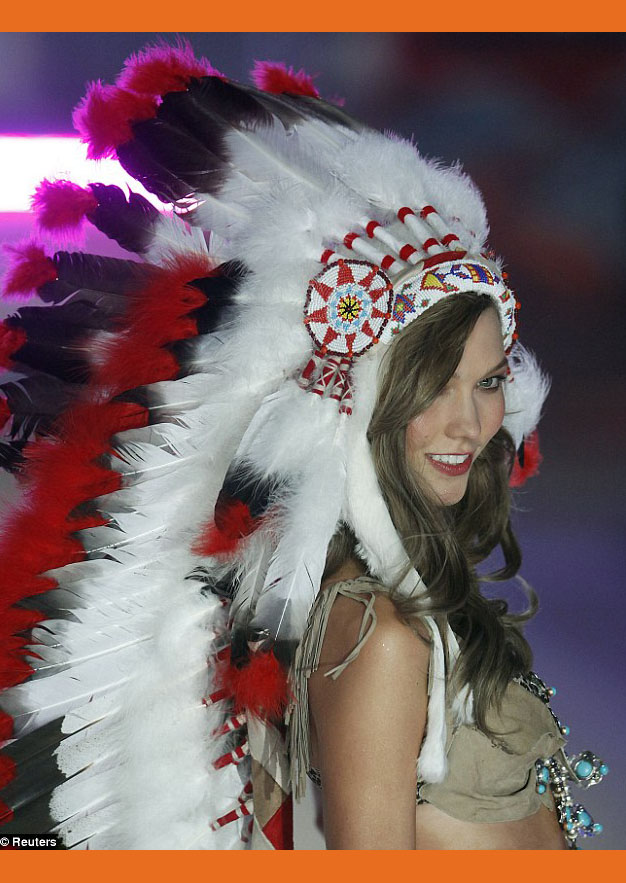
In 2012, Karlie Kloss modeled a leopard-print lingerie set while wearing the headdress, also known as a war bonnet, along with turquoise jewelry and fringe-adorned heels for a Victoria’s Secret Fashion Show.
Any issues with this?
Lesson 2 Wrap Up and Looking Ahead
Summary
This lesson has helped us understand that the way racial and ethnic identities are represented in American media and in company marketing. In addition, communication efforts is crucial to how different racial and ethnic groups are understood in society.
Check and Double-Check
By the end of this lesson, make sure you have completed the readings and activities found in the Lesson 2 Course Schedule.
Looking Ahead
In the next lesson, we will examine communication styles across cultures.
References
Astor, M. (2017, Oct. 8). Dove Drops an Ad Accused of Racism. The New York Times. https://www.nytimes.com/2017/10/08/business/dove-ad-racist.html
BBC News. (2017, April 4). Nivea removes 'white is purity' deodorant advert branded 'racist'. https://www.bbc.com/news/world-europe-39489967
Bramlett-Solomon, S., & Carstarphen, M. G. (2017). Race, gender, class and media: Studying mass communication and multiculturalism. Dubuque, IA: Kendall Hunt Publishing Company.
CDC WONDER. (2016). Office of Management and Budget (OMB) Directive No. 15: Race and ethnic standards for federal statistics and administrative reporting. https://wonder.cdc.gov/wonder/help/populations/bridged-race/directive15.html
Cole, N. L. (2018, July 23). The definition of whiteness. https://www.thoughtco.com/whiteness-definition-3026743
Diffen LLC. (n.d.). Ethnicity vs. race. https://www.diffen.com/difference/Ethnicity_vs_Race
Frey, W. H. (2018). The US will become 'minority white' in 2045, Census projects. The Avenue. https://www.brookings.edu/blog/the-avenue/2018/03/14/the-us-will-become-minority-white-in-2045-census-projects/
Gender Spectrum. (2017). Understanding gender. https://www.genderspectrum.org/quick-links/understanding-gender/8
Gökçen, S. (n.d.). Pictures in our heads. http://www.errc.org/roma-rights-journal/pictures-in-our-heads
Jewish Public Library, A Project of American-Israeli Cooperative Enterprise, n.d. Jewish Population in the United States by State. https://www.jewishvirtuallibrary.org/jewish-population-in-the-united-states-by-state.
Keating, D., & Karklis, L. (2016, November 25). The increasingly diverse United States of America. The Washington Post. https://www.washingtonpost.com/graphics/national/how-diverse-is-america/
Lumen Learning. (n.d.). Who is American? Racial and ethnic diversity in the United States. https://courses.lumenlearning.com/boundless-politicalscience/chapter/who-is-american/
Ma, K. (2011, August 19). Marketing misstep: Nivea pulls ad that sparked racial controversy. Time. http://newsfeed.time.com/2011/08/19/marketing-misstep-nivea-pulls-ad-that-sparked-racial-controversy/
Midwives Alliance of North America. (2016). Project Implicit. https://mana.org/healthcare-policy/project-implicit
Multicultural. (n.d.). In Merriam-Webster's online dictionary (11th ed.). https://www.merriam-webster.com/dictionary/multicultural
PEW Research Center, Washington, D.C. July 26, 2017. "Demographic Portrait of Muslim Americans." https://www.pewforum.org/2017/07/26/demographic-portrait-of-muslim-americans/#muslims-in-the-us
Project Implicit. (2011). Frequently asked questions. https://implicit.harvard.edu/implicit/faqs.html
Pruneda-Hernandez, S. (2018). The importance of culturally diverse voices in educational settings. https://slideplayer.com/slide/14590501/&hl=en&gl=us&strip=1&vwsrc=0
Rapp, N., & Jenkins, A. (2018, July 24). Chart: These 6 companies control much of U.S. media. Fortune. http://fortune.com/longform/media-company-ownership-consolidation
Spark, A. (2007). Nutrition in public health: Principles, policies, and practice. Boca Raton, FL: Taylor & Francis Group.
Stack, L. (2018, January 8). H&M apologizes for 'monkey' image featuring black child. The New York Times. https://www.nytimes.com/2018/01/08/business/hm-monkey.html
Stalder, D. R. (2018, May 29). Racism at Starbucks. Psychology Today. https://www.psychologytoday.com/intl/blog/bias-fundamentals/201805/racism-starbucks?amp
Statista. (2017). Daily media consumption in the U.S. 2017. https://www.statista.com/statistics/276683/media-use-in-the-us/
U.S. Census Bureau. (2010). Hispanic or Latino origin. https://factfinder.census.gov/help/en/hispanic_or_latino_origin.htm
U.S. Census Bureau. (2018). About race. https://www.census.gov/topics/population/race/about.html
Victor, D. (2017, April 5). Pepsi pulls ad accused of trivializing Black Lives Matter. The New York Times. https://www.nytimes.com/2017/04/05/business/kendall-jenner-pepsi-ad.html
Winsor, M., & McCarthy, K. (2018, April 19). Men arrested at Starbucks were there for business meeting hoping to change 'our lives’. ABC News. https://abcnews.go.com/GMA/News/men-arrested-starbucks-business-meeting-hoping-change-lives/story?id=54578217
Woodyard, C. (2018, May 29). Starbucks anti-bias training: Why the coffee chain closed 8,000 stores. USA Today. https://www.usatoday.com/story/money/business/2018/05/29/starbucks-closure-racial-bias-training-tuesday/650316002/
Zimmermann, K. A. (2017, July 12). What is culture? Definition of culture. Live Science. https://www.livescience.com/21478-what-is-culture-definition-of-culture.html