Main Content
Lesson 2: The Marketing Research Process and Research Design

2.1 Lesson Overview
Picture It!
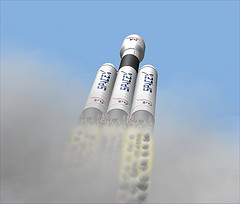
However, SpaceX does have three initial ideas: (1) Offer two-week trips to research teams from companies and universities that allow the participants to conduct their own research for two weeks on Mars, (2) offer two-week guided tours to Mars for very rich individuals, and (3) provide monthly trips to Mars and back to Earth, establishing a colony on Mars such that people can stay as long as they want on Mars and can travel back when they want.
The company is uncertain about its technical developments in the next few years, but wants you to explore the profitability of these three options. It is also open to alternative ideas that can be commercialized. SpaceX expects you to provide a recommendation on which of the three ideas has the highest expected profitability.
At this point, you have been exposed to various examples of marketing research studies. You may have noticed that there is a wide variety of problems and decisions that may require marketing research.
Although the marketing research for SpaceX provides enormous challenges for the marketing researcher, other marketing research problems may be defined much more narrowly. For example, Jif Peanut Butter wants to reevaluate the sizes of the peanut butter jars it sells. Currently, the company offers 15.5 oz, 27.3 oz, 40 oz, and 4 lbs. Jif wants to know if there is demand for a smaller-sized jar.
Is there an overarching framework that applies to all types of marketing research, including the SpaceX and Jif examples? The answer is "Yes." This lesson will explore the steps that make up the marketing research process. This process will also provide the framework for the rest of this course, so it is very important to develop a good understanding of it. The remainder of the course will cover each step in more detail.
Lesson 2 will help you develop an in-depth understanding of the marketing research process and the research design, which will require some reading. The goal here is to get a solid foundation for the rest of the lessons. Lesson 2 covers the following topics:
- An overview of the marketing research process.
- When there is a need for marketing research.
- How to define the problem for the marketing research.
- How to establish research objectives.
- Three types of research designs: the exploratory, descriptive, and causal research design.
Note that for this Lesson you will have to read a book chapter by Burns and Bush that is available through the Course Reserves on the course navigation menu. So, you do not have to buy the book.
Please watch Dr. Eelco Kappe, the course author, talk briefly about examples (Video 2.1).
EELCO KAPPE: You just saw the examples of Jif and SpaceX, and examples are going to be really important in this marketing research course. Examples are very helpful and valuable to relate a theory to practice and to understand what we're learning in this course. However, in this lesson, we're going to focus a little bit more on the theory. And hopefully, we are all getting a solid foundation on what marketing research is.
So this lesson requires a little bit more reading than the rest of the course. There's a book chapter involved that you should read before continuing with the rest of this lesson, and it will help you to understand the marketing research process and the 11 different steps that make up the marketing research process. I know it's a lot of reading this time, but it will really help us for the rest of the course. Good luck.
Lesson Objectives
Before continuing with this lesson, think about the lesson objectives. After completing this lesson, you should be able to
- describe the steps in the marketing research process;
- define the marketing research problem;
- develop an understanding of the criteria that all research objectives should meet; and
- distinguish three different research designs.
Lesson Roadmap
By the end of this lesson, make sure you have completed the readings and activities found in the Lesson 2 Course Schedule.